
Before I Designed Spaces, I Designed Desire.
Before a Space Exists, I Have Already Lived There.
What is brand?
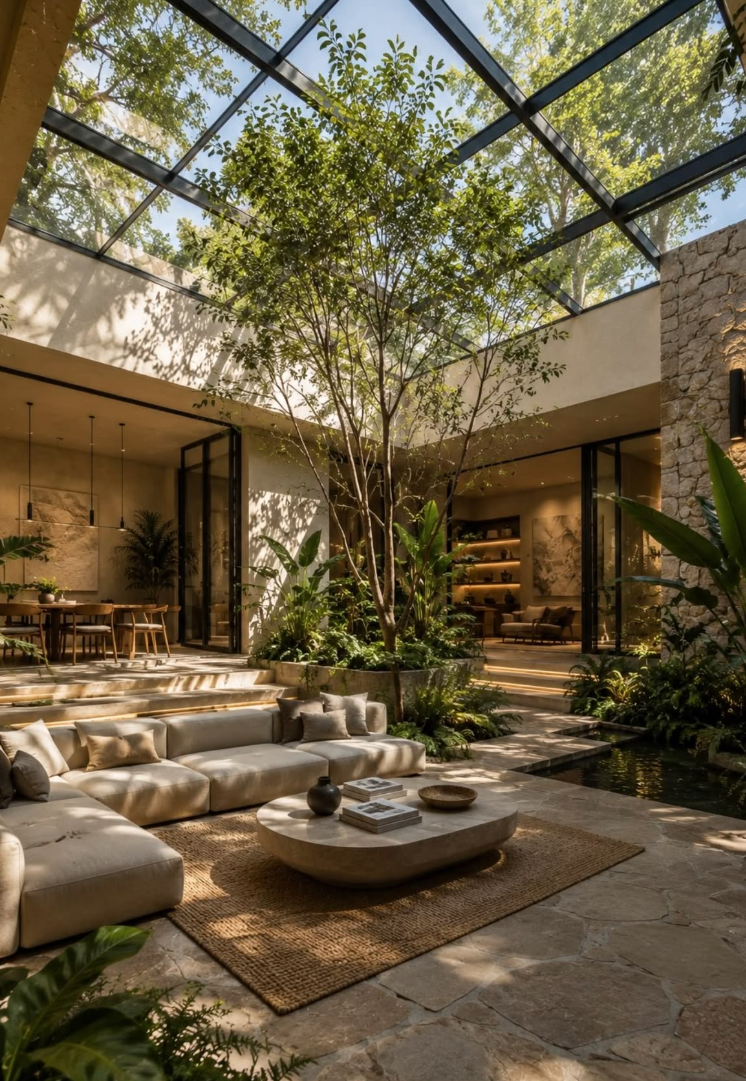
Want a high vibrational home?
I have always believed that a space can be beautiful and still leave you feeling absolutely nothing.
Aesthetics matter to me. Deeply. Proportion, materiality, light, color, scent, sound, art, furniture, objects the details create the visual language of a space. Beauty has power. It can change our mood, create desire, signal care, and make us see the world differently.
But beauty alone isn't enough. The real meat on the bone is intention. Before I begin thinking about what a space should look like, I increasingly find myself asking a different question:
How do I want someone to feel here? That question changes everything.
For me, high-vibrational design isn't about crystals in every corner or attaching spirituality to an aesthetic. It is about designing with a heightened level of consciousness understanding that the environments we create have the ability to influence how we feel, behave, connect, rest, work, heal, celebrate, and grow.
A room is never just a room. It is a container for human experience.
So when I think about intentional design, I start beyond the visual. How should the space function? What behaviors should it encourage? Should people gather or retreat? Should they feel energized or grounded? Should conversation happen naturally? Should the experience slow you down or wake you up?
And then I go even further. What kind of growth do we want this space to support? What could expand here? What could become possible here? What kind of consciousness are we creating space for?
These questions might sound philosophical, but I believe they have very practical implications for design. They begin to influence everything: architecture, circulation, natural light, materials, acoustics, technology, furniture placement, scent, landscaping, programming even how someone is welcomed when they walk through the door.
The physical and the emotional are not separate. Neither are the beautiful and the functional. When they are considered together, design begins to operate at another level.
I think that is what I mean when I talk about creating high-vibrational spaces. It isn't a specific design style. There isn't a prescribed palette or material library. It is a way of thinking.
It is creating spaces with awareness. Spaces that have a reason for being.
Spaces that understand the people who will inhabit them. Spaces that aren't simply asking, Does this look good? but also, Does this feel good? Does this support the life we want to live?
For me, that is where design becomes much more interesting.
Because ultimately, I don't just want to create beautiful spaces. I want to create environments that shift something in you even if you can't immediately explain what it is. Beauty gets you through the door.
Intention determines what stays with you after you leave.
This is only the beginning of the conversation. In the coming entries, I want to break down these ideas further: feeling, function, energy, growth, expansion, consciousness, human connection, and the individual design decisions that can turn these concepts into something physical. Because perhaps the most interesting question isn't simply what should we design?
It's what do we want design to make possible?
As always, Live Well.
Love CB
Hospitality is Human Care.
The more I talk with my colleagues in hospitality, the more I realize I’m not alone in this thinking: We are all searching for better ways to care for people.
Over the past several months, I’ve been having conversations with hotel leaders, designers, operators, developers, wellness practitioners, and creatives about where hospitality is going.
Different disciplines. Different businesses. Surprisingly similar conversations. People are questioning what guests actually need now. What employees need. What communities need.
And whether creating another beautiful space or delivering another flawless service moment is enough. Increasingly, the conversation comes back to something much more human:
How do we make people feel cared for? Not wellness as an amenity. Not hospitality as performance.
Not another layer of luxury for luxury's sake.
Care.
Spaces that help people connect. Experiences that allow people to slow down. Service that feels intuitive, not transactional.
Environments that consider how someone feels, not simply what they consume. After more than 15 years of building brands, hotels, restaurants, and experiences, I’ve started calling this idea human care. What has been meaningful is discovering how many of my colleagues are searching for their own version of the same thing.
I believe hospitality can become something larger than an industry built around serving people. It can become an industry designed around caring for them. And I want to keep having that conversation.
If you work in hospitality, design, wellness, development, or brand and you’re thinking about this too, reach out. I’d like to hear what human care looks like from where you sit.
Until then… Live Well,
Love CB